Last updated November 17, 2026
Free written scope consultation - allowances, timeline, and change-order rules on paper before a single trade is scheduled
The Complete Driveway & Pavers Guide for Pasadena Homeowners
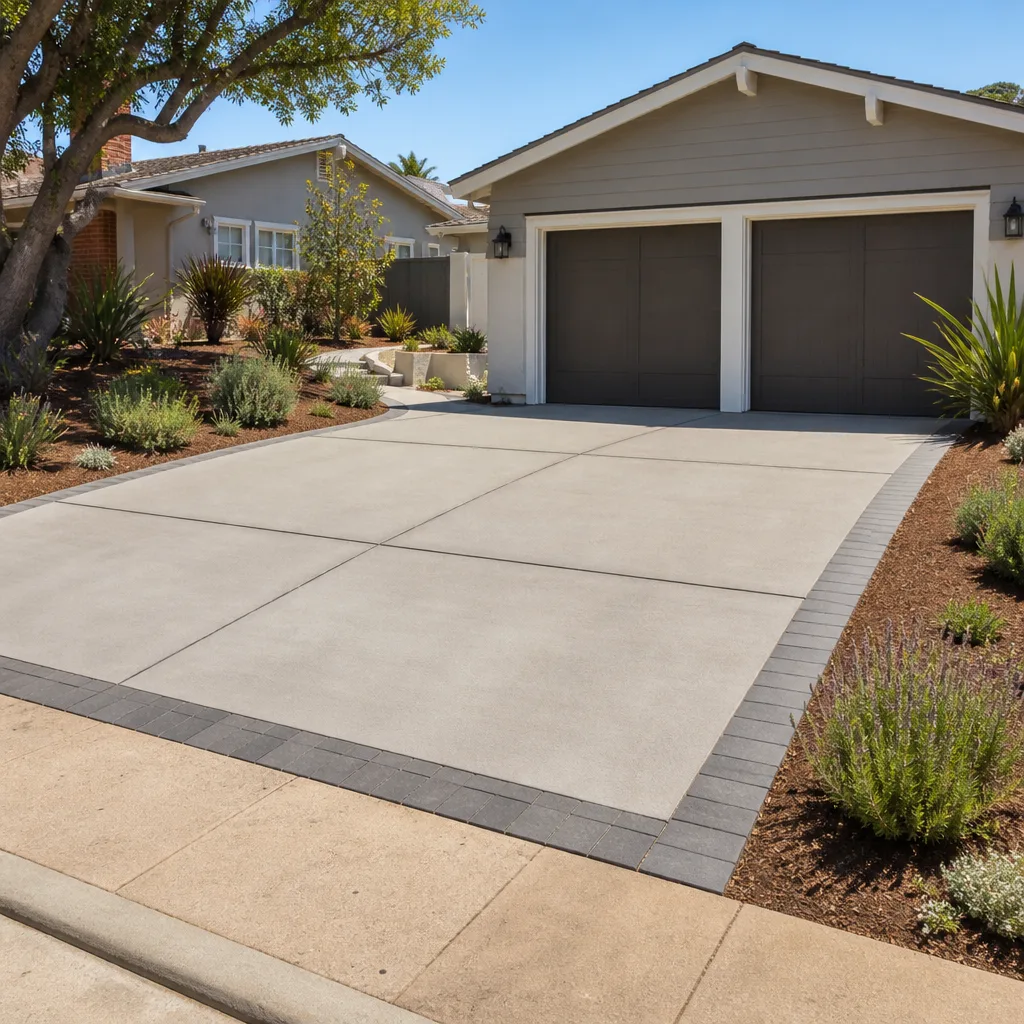
Most driveway paver failures in Southern California don’t start at the paver. They start six inches below it. The base course is where a driveway either holds for decades or starts to rut, shift, and settle within a few seasons, and it’s the part nobody photographs for the portfolio. Installers who import base specs written for wetter, colder climates routinely under-build that layer for Pasadena’s expansive clay soils and long heat season. This guide covers what actually belongs under and around a driveway in Pasadena: material choices, base depth, drainage, city rules on impervious surface, and how the driveway ties into the fence, gate, and landscaping work that surrounds it. By the end you’ll know how to compare paver bids on substance instead of square footage.
Quick Answer
A driveway in Pasadena needs a compacted aggregate base that accounts for the clay-heavy soil underneath, a slope and drainage plan that moves water away from the garage, and a paver material chosen for UV and heat performance rather than climate performance borrowed from another region. Concrete pavers from Belgard, Unilock, Tremron, Techo-Bloc, Cambridge Pavers, or Oldcastle are the most forgiving choice for most lots, natural stone delivers the most premium look at the highest cost and maintenance load, and porcelain pavers offer the tightest tolerances for homeowners who want a modern finish. Permits and impervious surface limits are set by the City of Pasadena, and permeable systems can sometimes help satisfy stormwater requirements. The written estimate sets the final price.
Styles & brands we work with
- Kitchen remodeling
- Bathroom remodeling
- Home additions & ADU
- Roofing
- Windows & doors
- Driveway & pavers
- Fence
Table of Contents
- Why Pasadena’s Clay Soils Change the Base Spec
- Concrete Pavers vs. Natural Stone vs. Porcelain
- Impervious Surface Rules and Permeable Pavers in Pasadena
- Slope and Drainage on a Typical Pasadena Lot
- What Does a Paver Driveway Cost in Pasadena?
- How a Paver Driveway Goes In, Step by Step
- Tying the Driveway to Fence, Gate, and Landscape Work
- Keeping Pavers Looking Right in Pasadena’s Heat
Why Pasadena’s Clay Soils Change the Base Spec
The San Gabriel Valley sits on expansive clay soils, and expansive is the operative word. Clay that holds moisture swells, clay that dries shrinks, and a driveway built over it moves with every seasonal swing. Coastal specs assume moderate moisture and mild swings. Northern California specs assume a winter wet season followed by a dry summer. Pasadena gets the heat without the freeze, which sounds easier but actually concentrates the problem: months of sustained dry heat pull moisture out of the clay, the subgrade shrinks, and a base course that wasn’t compacted in lifts settles into the void.
What that means practically:
- Base depth matters more here than paver thickness. A properly compacted aggregate base is what spreads load across the clay. Skimp on it and even a premium paver will rock and rut.
- Compaction happens in lifts. Base material placed in one thick pass and compacted once traps air. Correct work places aggregate in layers, compacts each one, and tests density before the bedding sand goes down.
- Aggregate choice is not interchangeable. Crushed stone base graded for drainage behaves very differently from recycled concrete or fill dirt. Ask what’s going under your pavers by name and gradation.
- Drainage starts below the surface. If water can’t leave the base, the clay underneath stays saturated and the whole assembly moves.
This is the single most common place where a low bid gets low. It’s invisible after the job is done, so a contractor can save real money by thinning the base and nobody notices for two or three years. In our experience the base detail is the first thing worth asking about when you compare estimates, and the answer tells you more than the paver brand on the sample board.
Concrete Pavers vs. Natural Stone vs. Porcelain
Pasadena’s UV index and summer heat are hard on surfaces that hold color and finish poorly. The right material is the one that performs under sustained sun, thermal cycling without frost, and the occasional hard rain event that arrives all at once. Here’s how the three main families compare.
Concrete pavers
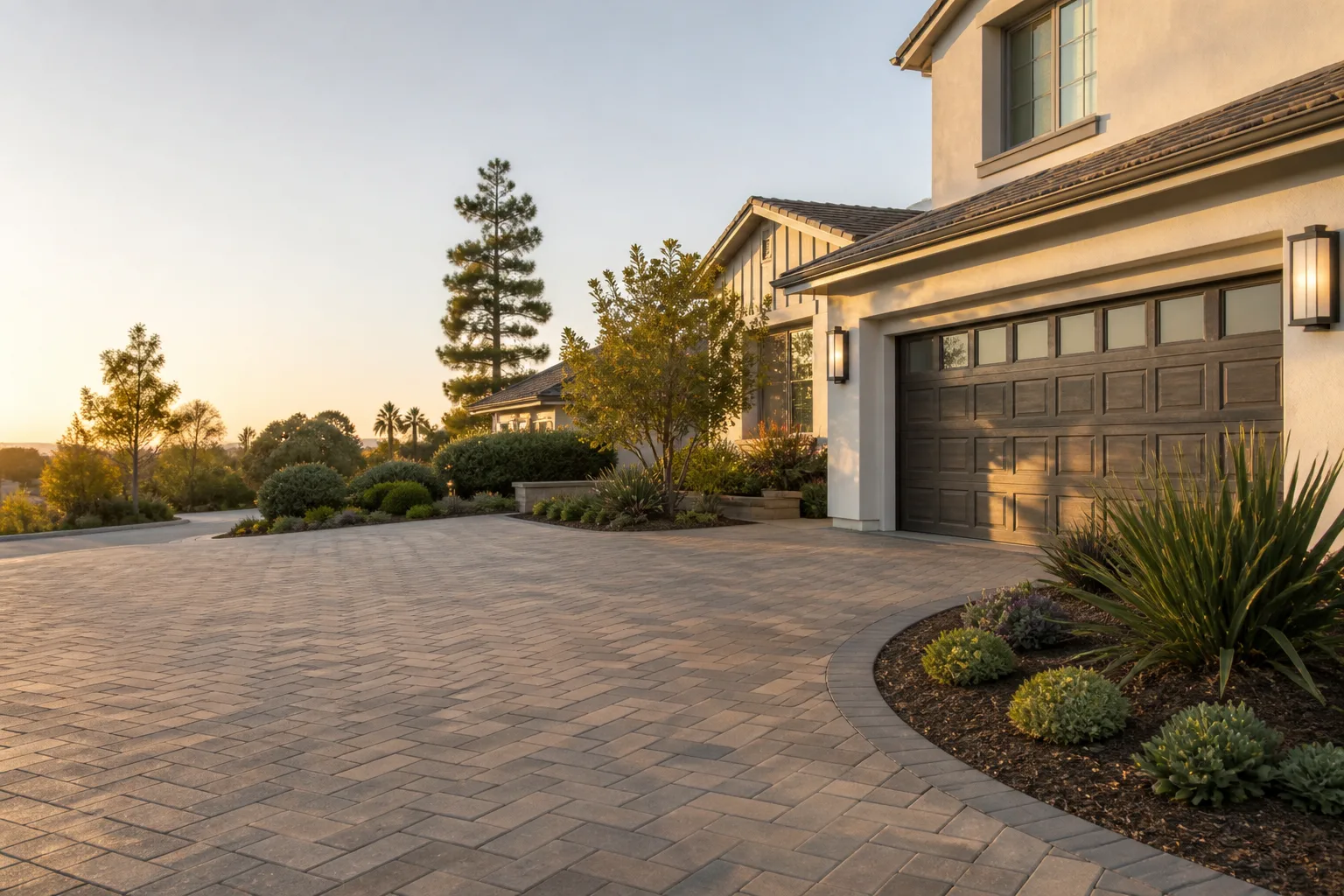
The workhorse choice for most Pasadena driveways, and the most flexible on design. Belgard, Unilock, Tremron, Techo-Bloc, Cambridge Pavers, and Oldcastle all make systems with different thickness ratings, joint patterns, and color-through bodies, which matters because a surface-colored paver that chips reveals a different color underneath. Concrete pavers handle heat well, resist fading when the pigment is integral, and can be lifted and reset if a utility line ever needs access. They also work in permeable configurations, which we’ll get to below.
Natural stone
Stone delivers the most substantial look and the highest cost. It’s also the least standardized. Stone varies in thickness, absorption, and hardness from piece to piece, which means installation takes more skill and the base has to be that much more consistent to keep the surface plane true. Some stone types hold up beautifully under Pasadena sun; others stain, spall, or absorb heat and stay hot underfoot. If you’re drawn to stone, the conversation should be about the specific stone and its absorption characteristics, not “natural stone” as a category.
Porcelain pavers
Porcelain is the modern option: tight dimensional tolerance, a wide range of finishes that read like stone or concrete, and excellent color stability in UV. It’s also rigid and less forgiving of a base that moves, so it’s the material that punishes a thin base spec hardest. On a well-built assembly over prepared clay, porcelain gives a clean, contemporary driveway. On a marginal one, it’s the first thing to crack.
The honest summary: concrete pavers are the safest bet for a typical Pasadena lot, natural stone is a premium decision that needs a specific stone conversation, and porcelain rewards homeowners who are willing to pay for a base built to tighter tolerance. Material choices, not material surprises, is the standard we work to, and that starts with naming what’s going under the pavers as clearly as what’s going on top.
Impervious Surface Rules and Permeable Pavers in Pasadena
Pasadena regulates how much of a lot can be covered by hard surfaces, and a new or expanded driveway counts toward that limit. The rules exist for a reason: hard surfaces shed water that would otherwise soak into the ground, and in a city that gets its rain in concentrated events, that runoff has to go somewhere. If you’re replacing an existing driveway within the same footprint, you’re usually in simpler territory than if you’re widening it, extending it toward the street, or adding a parking pad.
Permeable pavers can change the math. A permeable system is built so water passes through the joints and the open-graded base and infiltrates the soil below, rather than running off. Depending on the site and the local requirements, that can reduce the effective impervious area of the driveway toward the limit, which is one reason permeable systems get used on Pasadena lots where a conventional surface would push coverage over what the city allows. The catch is that permeability only works if the soil below drains and the base is built open-graded. Clay-heavy ground can require design work before a permeable system makes sense.
We don’t quote permit or stormwater outcomes from memory. Every lot is different, the City of Pasadena’s building department is the authority on your property, and the right sequence is to confirm the site requirements before the material is ordered. Ask your contractor to walk you through what the city will require for your specific footprint before you sign. If permeable pavers are part of the design, ask how the base and soil are being handled to make them work as intended.
Slope and Drainage on a Typical Pasadena Lot
Pasadena lots with an attached garage almost always slope from the street down to the garage door or from the garage out toward the street, and either way, the driveway is the drainage plane for a lot that also has a house on it. A paver surface that sheds water toward the garage door is a slow-motion problem. The water doesn’t need to flood the garage to do damage; it just needs to sit against the door threshold and the slab edge long enough to work its way in.
A correct plan on a typical Pasadena lot covers four things:
- Establish the finish elevations first. Before any base goes down, set the height of the finished surface at the garage threshold, at the street apron, and at the side edges. The driveway has to meet all of those without creating a lip or a dam.
- Set a consistent fall away from the house. The surface should pitch water away from the garage and toward the street or a designed drainage point, without steepening the slope so much that it becomes awkward to walk or drive.
- Handle water at the low point deliberately. If the lot’s geometry creates a low spot, the answer is a channel drain, a swale, or a transition to a permeable section, not a thicker paver.
- Carry the pitch through to the street apron. The apron detail is where water tends to pond, and it’s the detail that gets rushed at the end of a job.
Good drainage design shows up on paper before it shows up on the ground. Ask to see how the elevations on your lot are being set before excavation starts, and if the answer is “we’ll follow the existing slope,” ask what happens to the water at the bottom of it.
What Does a Paver Driveway Cost in Pasadena?
A paver driveway in Pasadena is priced per project by a written, line-item estimate, and the ranges below are typical for a standard residential driveway rather than fixed quotes. The variables that move the number most are the base spec, the material family, the square footage, and how much site work the drainage plan requires. These are estimates, and the written estimate sets the final price.
| Line item | Typical estimated range | What moves it |
|---|---|---|
| Concrete paver driveway (single-car, standard depth) | Lower end of the market | Paver family, pattern, square footage |
| Concrete paver driveway (double-car, standard depth) | Mid range | Square footage, base volume, site access |
| Permeable paver system | Above standard concrete pavers | Open-graded base, soil conditions, drainage design |
| Natural stone surface | Premium | Stone type, thickness consistency, setting method |
| Porcelain paver surface | Premium | Base tolerance, surface finish, edge detailing |
| Base rebuild and compaction | Scales with driveway depth and square footage | Excavation volume, aggregate type, compaction in lifts |
| Drainage (channel drain or swale) | Per linear foot or per location | Low-point geometry, discharge route |
| Demolition and haul-away of an existing surface | Per square foot of removal | Concrete thickness, rebar, access for hauling |
We quote with line items so you can see where the money is going, and we don’t change a fixed price after the job starts. Two bids that look far apart are usually two different base specs or two different compaction methods, not two different paver prices. If one bid includes a base rebuild and another quietly doesn’t, the cheaper bid isn’t cheaper; it’s a different project. Call (844) 905-4587 for a free estimate, and ask for the base detail in writing.
How a Paver Driveway Goes In, Step by Step
Knowing the sequence is how you know what you’re paying for. A paver driveway in Pasadena follows a predictable order, and each step is where a shortcut becomes visible later.
- Site evaluation and elevations. Confirm the driveway footprint, the drainage route, the garage threshold, and the street apron. Confirm whether a permit is required and whether the impervious surface limit constrains the design.
- Demolition and excavation. Remove the existing surface if there is one, haul it away, and excavate to the depth the base spec requires. The excavation depth is set by the base, not the paver.
- Subgrade prep. Grade and compact the exposed soil, and address soft spots before any aggregate goes down. On expansive clay, this step is where moisture-sensitive areas get handled.
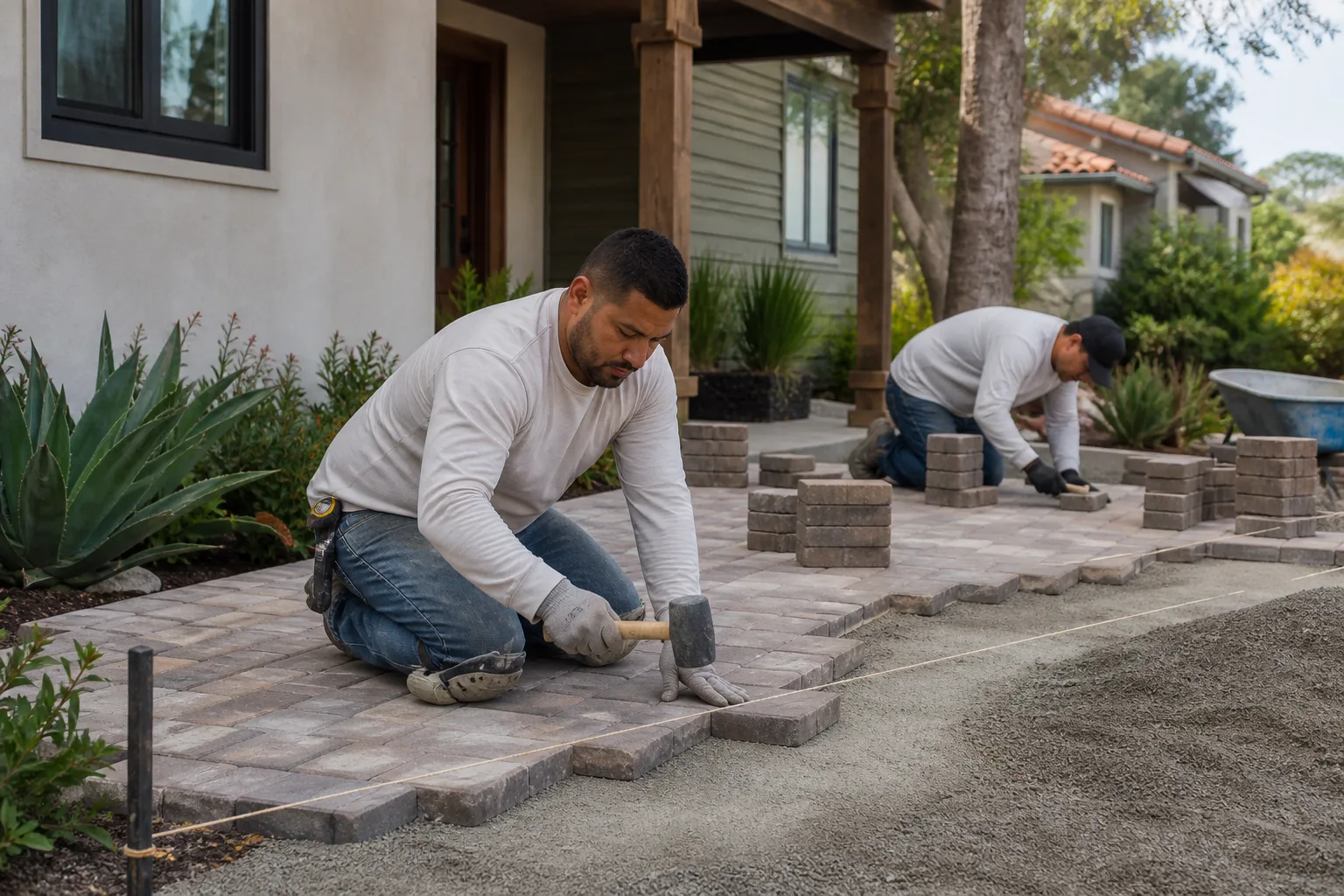
- Base placement and compaction in lifts. Place aggregate in layers, compact each lift, and check density. This is the step the guide’s opening warned about, and it’s the one most worth watching.
- Drainage installation. Set channel drains, swales, or transitions before the bedding layer goes down, so water has a designed path rather than whatever the pavers leave behind.
- Bedding layer and edge restraints. A thin, screeded bedding layer, then edge restraints set in concrete along the perimeter to keep the field from spreading.
- Paver installation, cutting, and joint sand. Set the field pattern, cut the perimeter and any transitions, then fill the joints with the specified sand. On a permeable system, the joint material is open-graded.
- Compaction and final inspection. Compact the finished surface, clean the site, check the pitch, and walk the job with you against the written scope.
The full sequence usually runs several days on a standard residential driveway, longer when the drainage design is involved or when an existing concrete surface has to come out. Anyone who tells you it’s a one-afternoon job is telling you which step they plan to skip.
Tying the Driveway to Fence, Gate, and Landscape Work
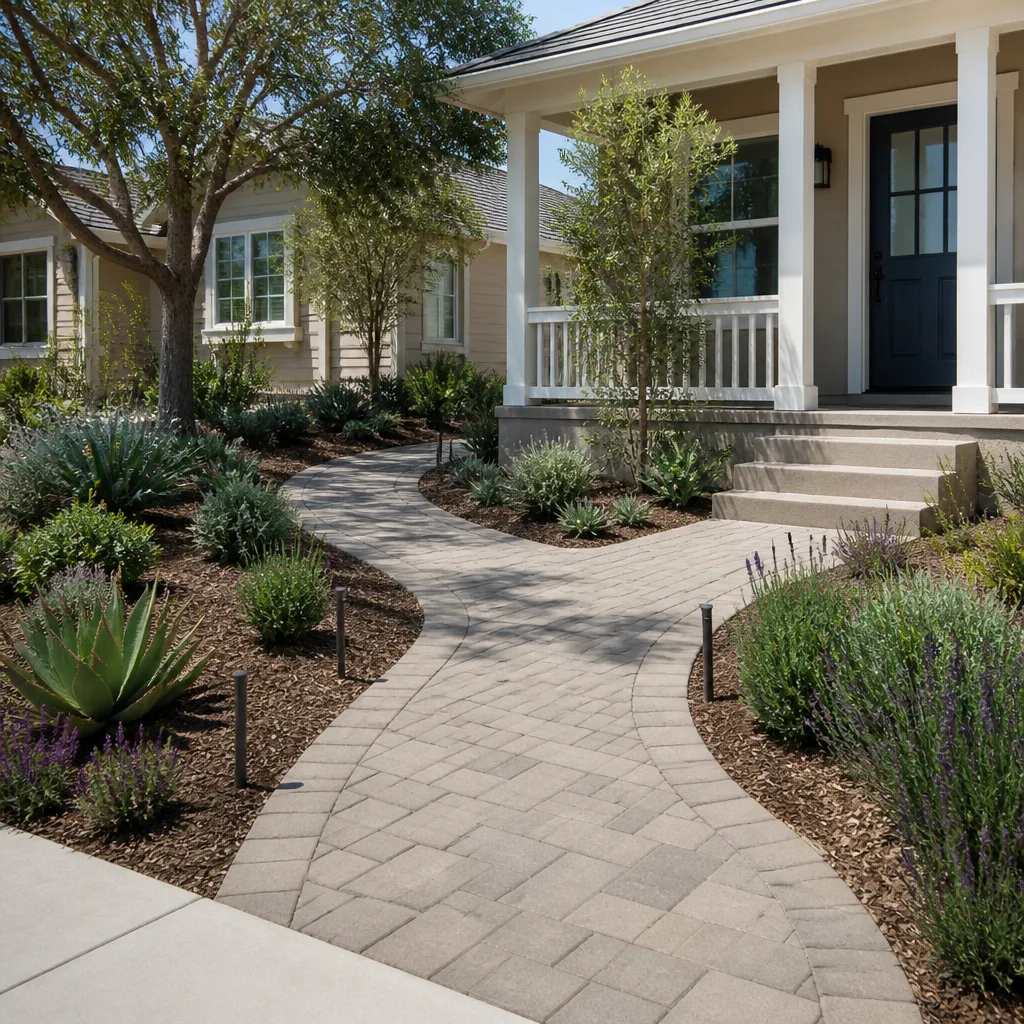
A driveway doesn’t sit alone on a lot. It meets a fence line, a gate, a front yard, and usually a side yard the car gets parked next to. When those are done by separate vendors, the fence posts get set after the pavers, or the gate gets hung at an elevation the apron doesn’t match, and you end up supervising a coordination problem you hired someone to remove.
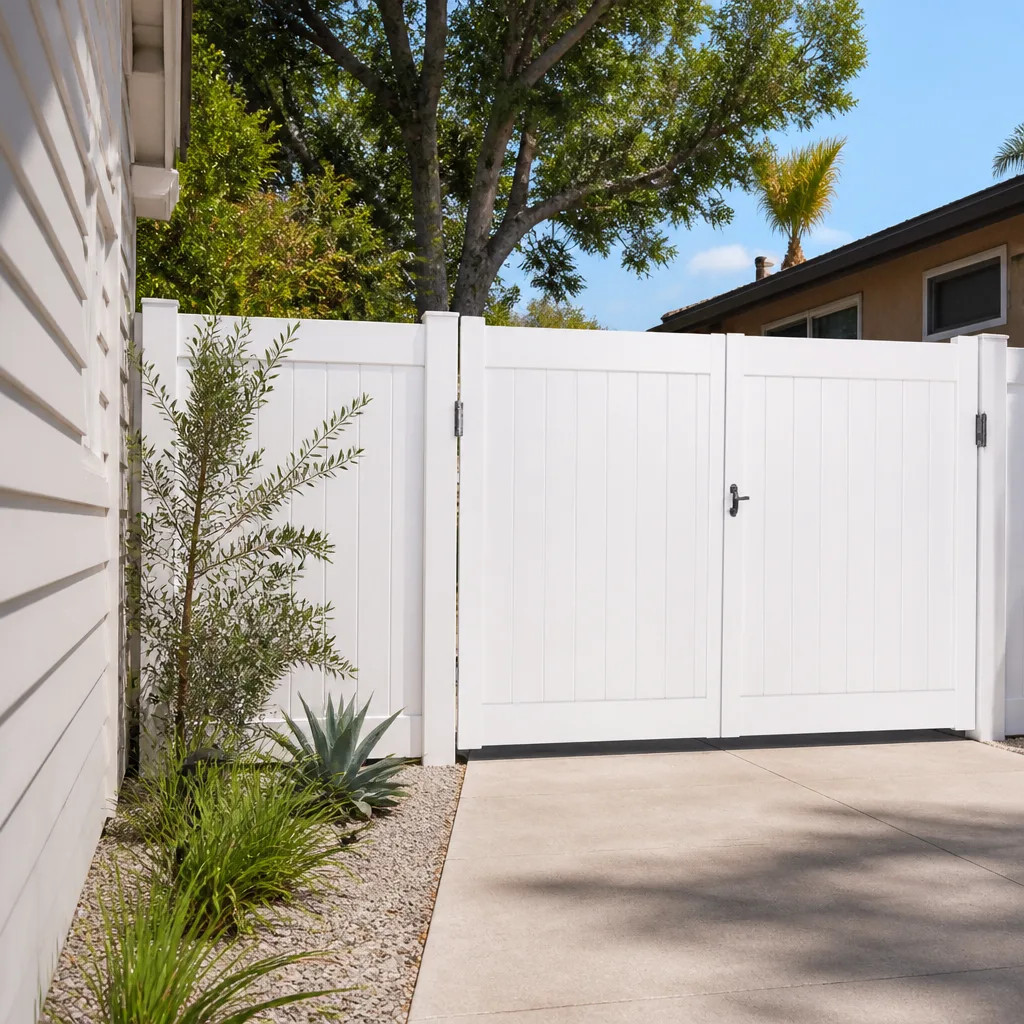
This is where a single contractor across every trade pays for itself. The driveway edge, the fence line, and the gate are one geometry problem. Fence posts go in before or alongside the paver work, not after, so the finished surface and the fence line agree with each other. Gates line up to the apron elevation, which means the gate swings free instead of dragging on pavers. Landscape transitions at the driveway edge get planned with the hardscape, not patched in afterward. And when the project also reaches the house itself, the same relationship covers it.
On the fence side, we work with fencing systems from Master Halco, Barrette, Ameristar, Jerith, Bufftech, and ActiveYards, which covers aluminum, vinyl, steel, and ornamental options across a wide range of budgets. On the driveway side, the six paver manufacturers on our bench mean the design conversation is about the right paver for the lot, not the one paver a crew happens to stock every week. And when a project includes a gate, we coordinate with the door and hardware side too, including Therma-Tru and ViewLux for exterior entries. You can see how those scopes fit together on our driveway & pavers page and our fence installation page, and if the project is bigger than a driveway, home additions & ADU is where the same single-contractor logic applies to a structure.
Brands you can look up before you commit matters most on the materials that sit next to each other. A paver edge and a fence base meeting at the same grade is easier to guarantee when one project relationship is responsible for both elevations.
Keeping Pavers Looking Right in Pasadena’s Heat
Pasadena’s summer sun is the main maintenance variable, not frost. UV fades poorly pigmented surfaces, heat drives joint sand out of narrow joints, and weeds find the driest, hottest edges first. None of that is hard to manage.
- Replenish joint sand as it settles. Sand works its way down over time, and joints without sand let the pavers shift. A seasonal check after the dry months is enough for most driveways.
- Weed the edges, not the field. Growth tends to start at the perimeter where sand has thinned. Edge restraints and a properly filled joint are the prevention.
- Keep the drainage path clear. Leaves and grit collect exactly where a channel drain or low point is designed to move water. A clear path at the low point is what keeps the base dry.
- Rinse rather than power-scrub stained spots. Aggressive cleaning on a stone or porcelain surface can dull the finish. Match the cleaning method to the material.
- Watch for settling, not fading. A paver that rocks underfoot or a joint that widens is a signal about the base, not the surface, and it’s worth a look early. Fading from sun is mostly a material-selection issue, which is why integral color matters up front.
If a section of a well-built driveway does need attention, pavers lift and reset cleanly, which is one of the practical reasons they stay popular in a hot, dry climate. The other reason is that a repaired paver field doesn’t leave a visible patch where the repair happened.
Common Mistakes to Avoid
- Budgeting pavers instead of budgeting the base. A bid that skimps on aggregate depth and compaction will fail on Pasadena’s clay, and the failure shows up after the warranty conversation has moved to a new owner. Ask for the base spec in writing before you compare numbers.
- Copying a coastal or northern California base spec. Specs written for wetter or colder regions don’t match clay-heavy ground under long heat. The base has to be designed for the soil on the lot, not the climate on the map.
- Ordering material before confirming impervious surface limits. The City of Pasadena governs how much of your lot can be hard surface, and expanding a driveway can push you over. Confirm the numbers on your property before a single paver is ordered.
- Ignoring the low point on the lot. A driveway that pitches correctly most of the way but ponds at one spot will keep dealing with the same water year after year. Channel drains and swales are not overkill on a lot that needs one.
- Skipping edge restraints or letting the fence crew work around the pavers. A paver field without restraints spreads at the edges, and fence posts set after the pavers tend to arrive at the wrong elevation. Sequence matters, and one contractor coordinating both avoids the argument.
- Choosing porcelain without choosing a tighter base. Porcelain is rigid. It’s an excellent surface on a base built to tolerance and a poor one on a base built to somebody else’s standard.
- Comparing square-foot prices across three bids. Two bids with the same paver and the same footage can include very different base work. Line-item bids are the only ones that compare cleanly.
See the difference
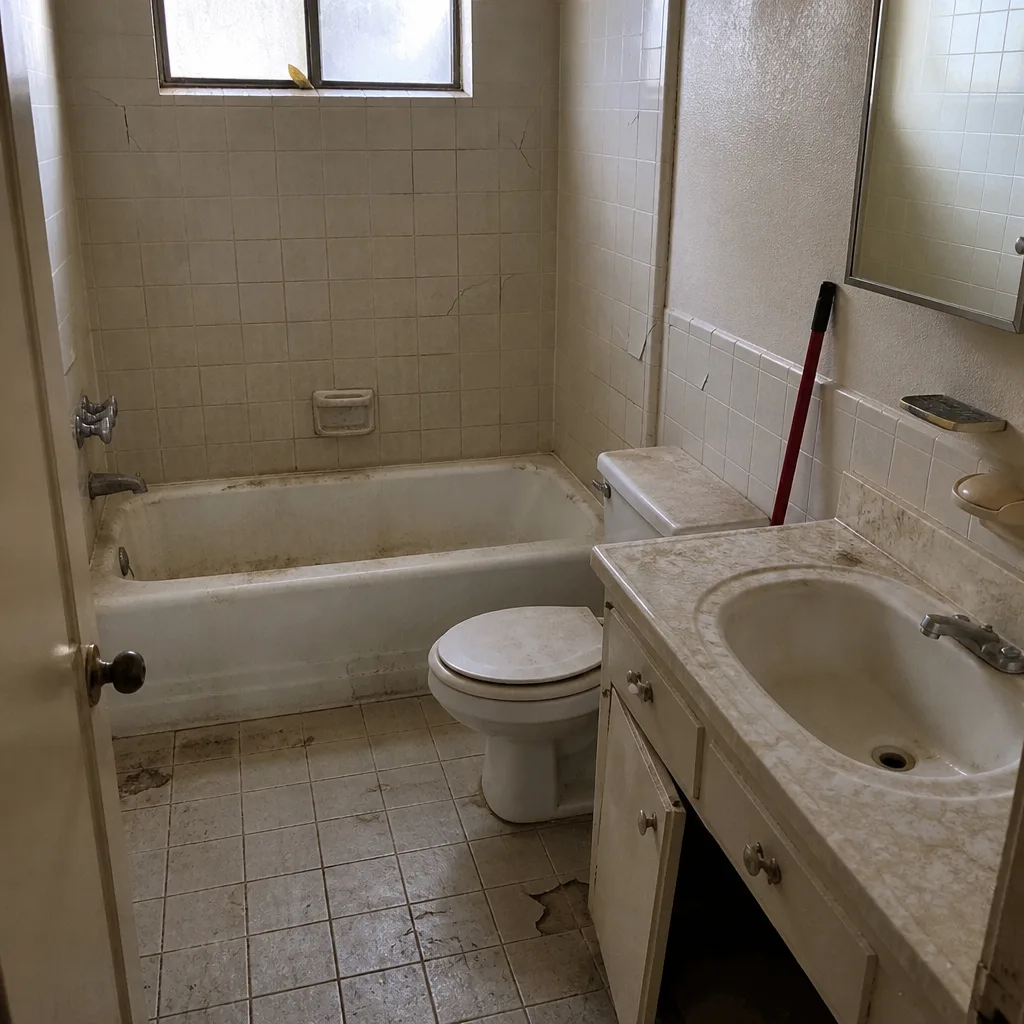 Before
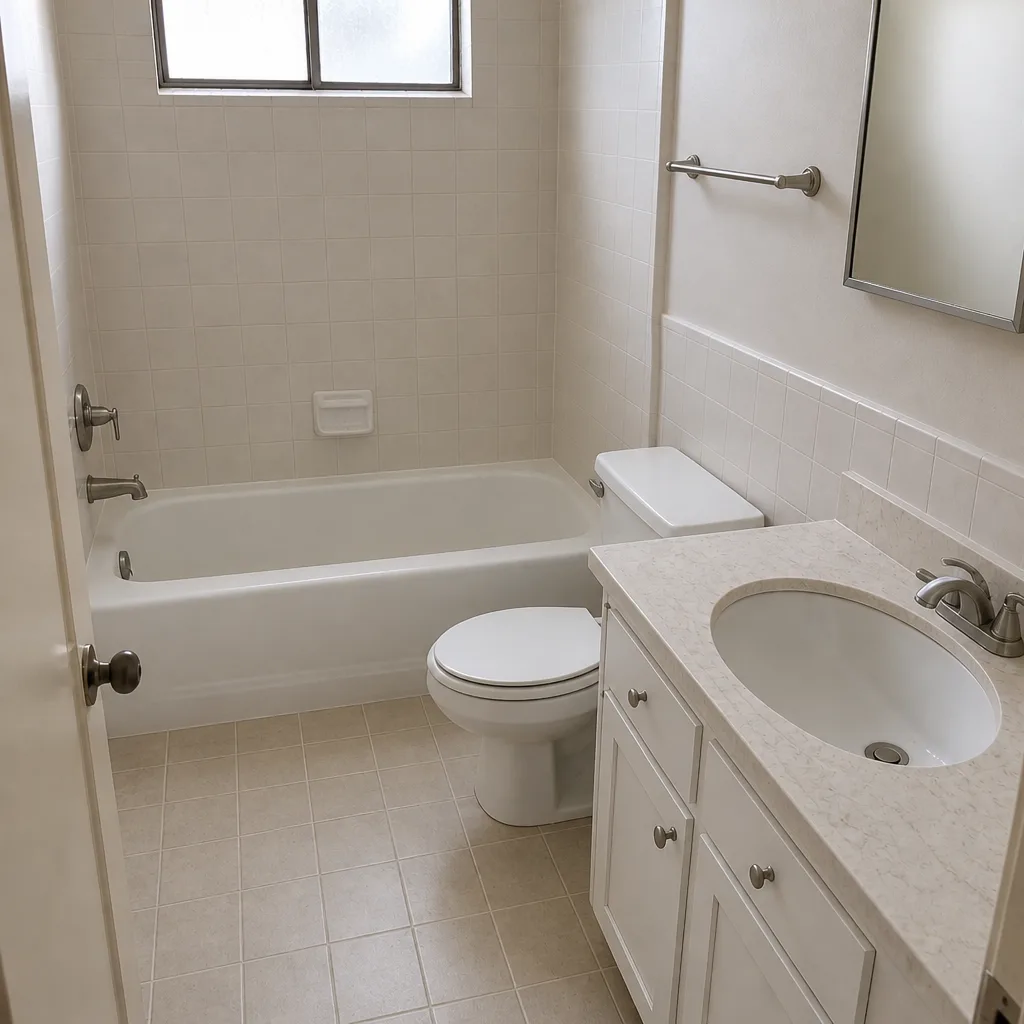 After
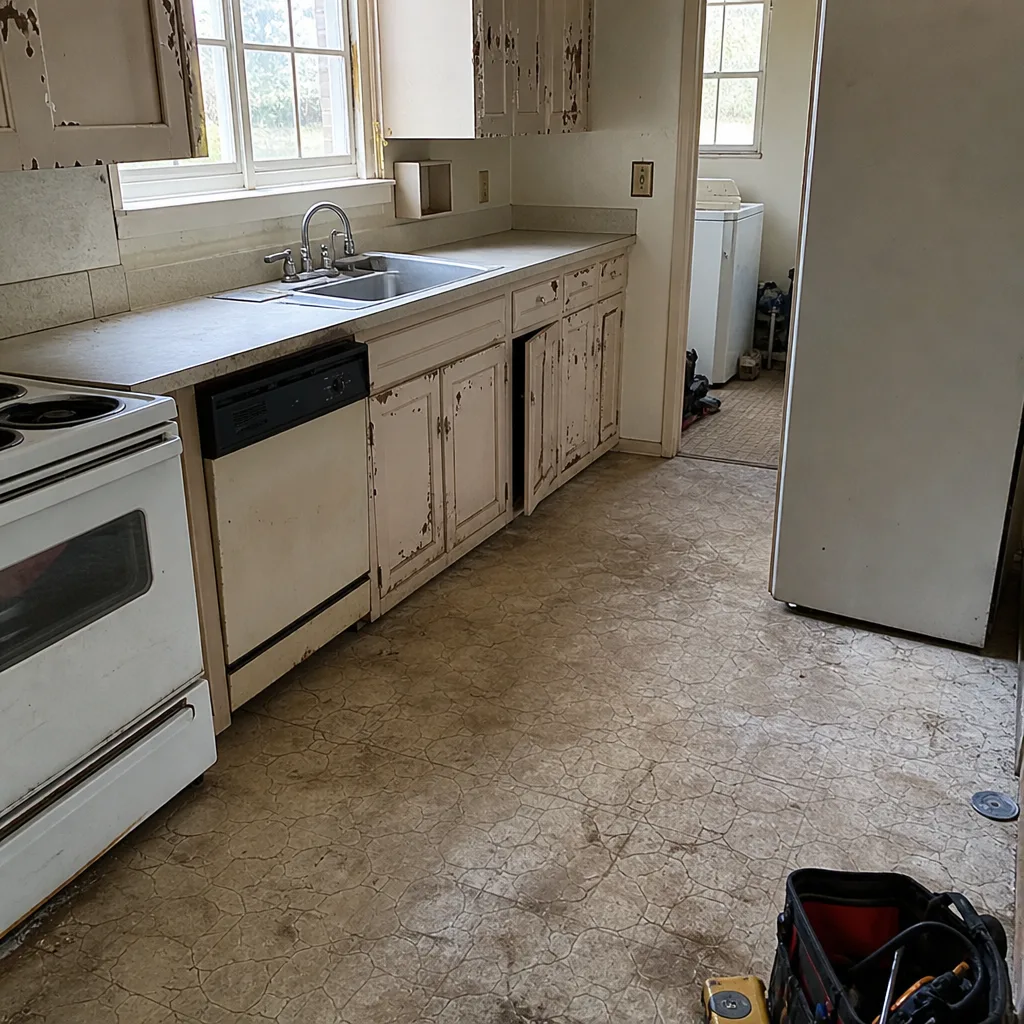 Before
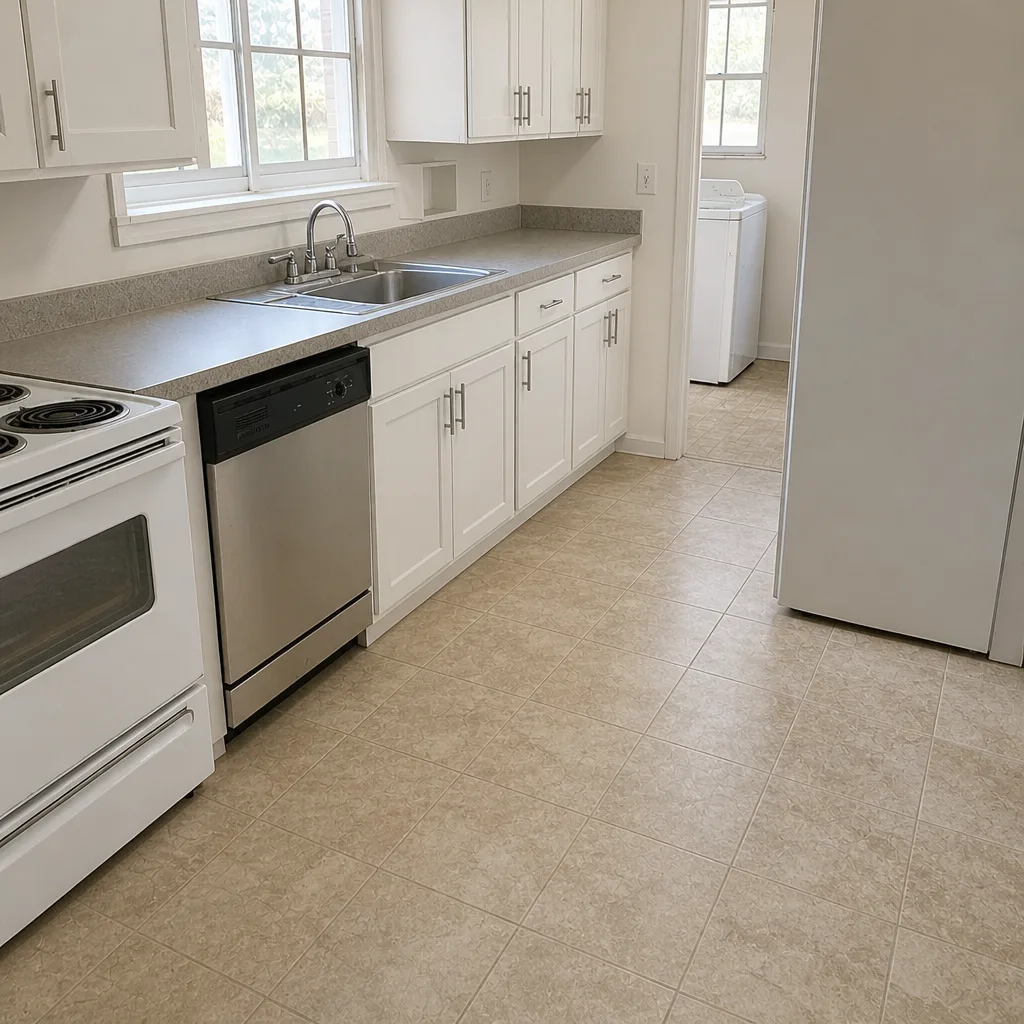 After
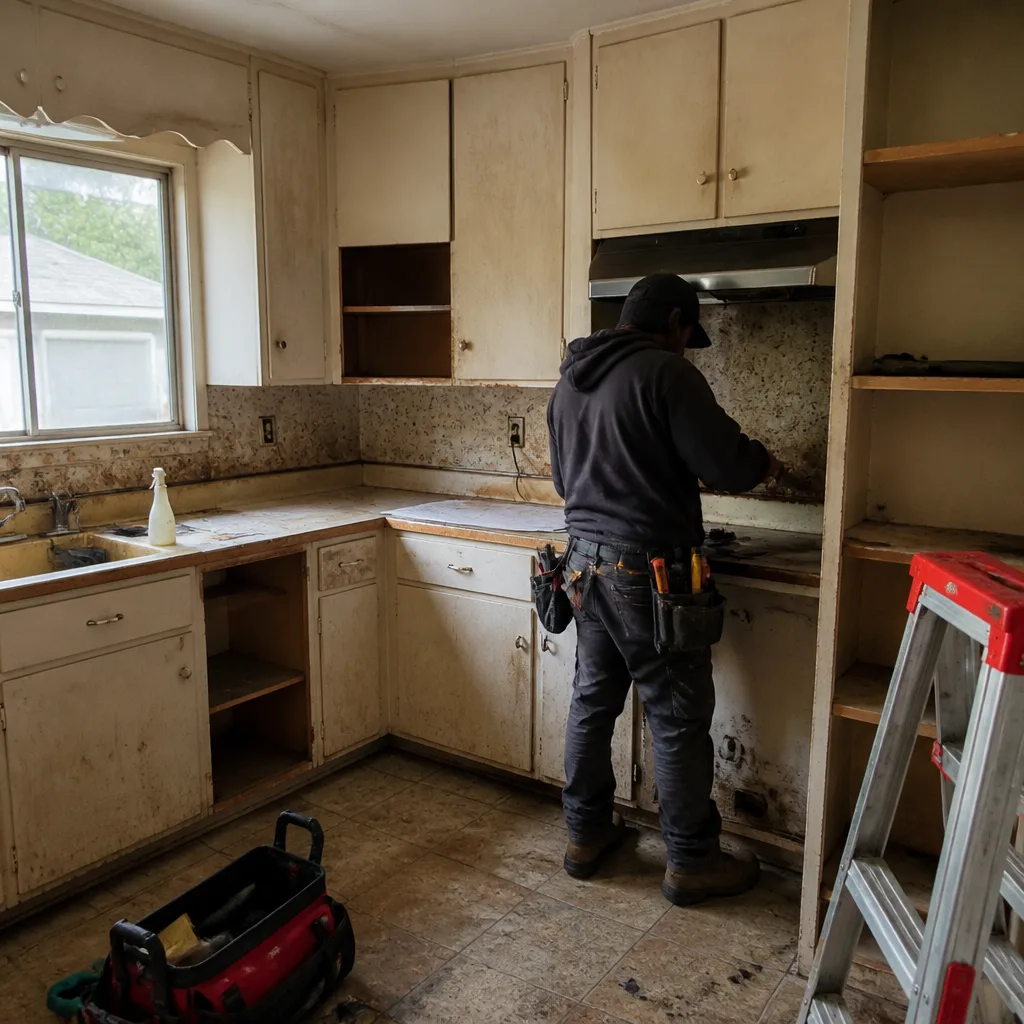 Before
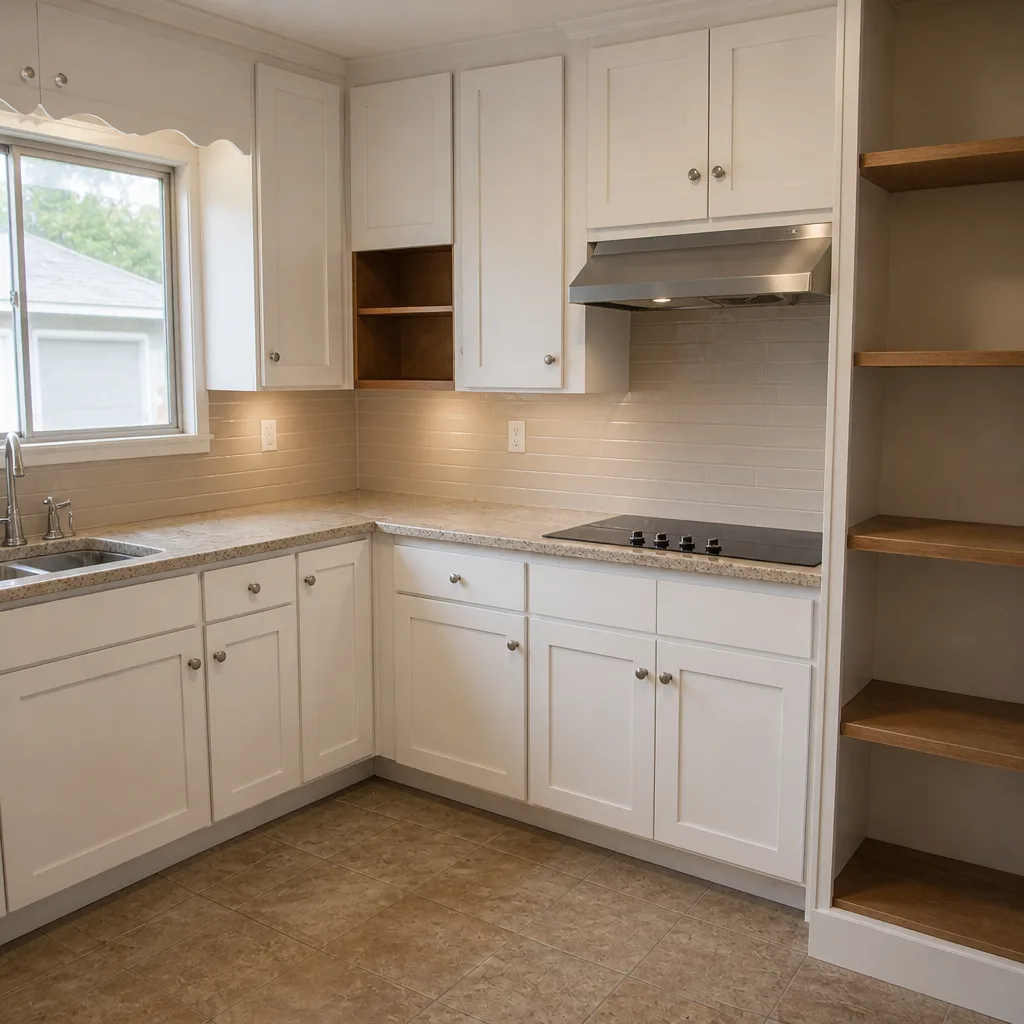 After
When to Call a Professional
A paver driveway involves excavation, a structural base, edge restraints, drainage, and a finish surface that has to match elevations at two ends of the lot. That’s not a weekend project, and a driveway that has to be redone costs more than one done correctly the first time. Specific cases where it’s time to get an estimate:
- The driveway is widening or extending, so the impervious surface numbers need to be checked against Pasadena’s limits before material is ordered.
- Water ponds at the garage threshold, at the street apron, or anywhere along the driveway after a rain.
- An existing surface is heaving, rutting, or settling, which points to a base issue rather than a surface one.
- The project involves a driveway, a fence, and a gate at the same elevations and you don’t want to coordinate three trade schedules.
- You want a permeable system and you’re not sure whether the soil under the driveway will support one.
We offer free estimates in Pasadena, and we quote in line items so you can see what’s under the pavers as clearly as what’s on top of them. Call (844) 905-4587. We answer 24/7. Fast dispatch from 7am to 7pm, Sunday through Friday.
Frequently Asked Questions
The correct base depth is set by the soil and the load, not by a number that applies everywhere, and on Pasadena’s expansive clay it needs to be deeper and more carefully compacted than a spec written for coastal or colder climates would call for. Confirm the base detail in writing before work starts, then verify compaction happens in lifts rather than one pass. Call (844) 905-4587 for a free estimate that includes the base spec.
Sometimes. Replacing a driveway within the same footprint is often a different review than widening it, adding a parking pad, or changing its relationship to the street, and impervious surface limits apply either way. The City of Pasadena’s building department is the authority on your lot, so the right step is confirming the requirements before material is ordered and before work begins. Call (844) 905-4587 for a free estimate, and we’ll walk you through what’s needed for your scope.
Permeable pavers can reduce the effective impervious area of a driveway, which matters on lots where coverage toward the limit is tight. Whether it works on your property depends on the soil’s ability to drain and on how the open-graded base is designed. Clay-heavy ground can need design work before a permeable system performs as intended. Call (844) 905-4587 for a free estimate and a drainage conversation specific to your lot.
Concrete pavers with integral color are the most forgiving choice for a typical Pasadena driveway, natural stone delivers the most substantial look with the highest maintenance consideration, and porcelain gives the tightest, most modern finish when the base is built to tighter tolerance. The heat itself mostly punishes poor color integration and a thin base, not any one material family. Call (844) 905-4587 for a free estimate with material samples you can research before you commit.
A standard residential paver driveway usually runs several days once work begins, with the schedule driven by demolition, excavation, base compaction in lifts, and drainage work. If the project also includes a fence and gate, those scopes are sequenced with the pavers so the elevations agree instead of getting patched afterward. Call (844) 905-4587 for a free estimate and a written timeline for your scope.
No. We quote in line items and work to a fixed price, so the number in the written estimate is the number you pay unless the scope changes at your request. We don’t come back with change orders after the pavers are down. Call (844) 905-4587 for a free estimate with the base, drainage, and material costs broken out separately.
The Bottom Line
A driveway in Pasadena is an engineering decision before it’s a design decision. The expansive clay under most lots demands a base built deeper and compacted more carefully than a spec borrowed from a wetter or colder region would call for, and the drainage plan has to move water away from the garage before the pavers ever go down. Between concrete pavers from names like Belgard and Techo-Bloc, natural stone, and porcelain, the right material is the one matched to how well the base is built underneath it. Confirm your impervious surface limits with the City of Pasadena first, and get line-item bids so you can compare what’s under the surface, not just the finish. Your driveway is one half of a geometry problem that includes the fence and gate, so handling both under one contractor saves the coordination. From the driveway to the roofline, we cover the full property under one project relationship, so brand choices stay visible and the elevations stay consistent. Explore Construction Pasadena to see all seven service lines together, and call (844) 905-4587 for a free estimate with the base spec and drainage plan in writing. We answer 24/7. Fast dispatch from 7am to 7pm, Sunday through Friday.
Written by the team at Construction Pasadena.